
What It Means When They Say ‘Burgundy Wine Is About Place’

Few wine regions in the world are as intensely studied or as passionately debated, as Burgundy. When people say “Burgundy wine is about place,” they are not speaking in metaphor. They are pointing to a centuries-long understanding that minute differences in geography, geology, and climate profoundly shape the wine in the glass.
In Burgundy, place is everything.
Why Burgundy Is the World’s Most Studied Wine Landscape
Nowhere else has the geology of winegrowing land been examined with such scrutiny. In Burgundy, discussions do not stop at soil type; they reach back to the Jurassic, Cretaceous, and Cenozoic periods, tracing how ancient seabeds, tectonic shifts, and erosion shaped today’s vineyards. It is entirely plausible and routinely observed, that two vineyard parcels separated by just a few meters produce markedly different wines. This sensitivity to site is the foundation of Burgundy’s identity.
Roman Roots, Monastic Precision, and the Rise of Pinot Noir and Chardonnay
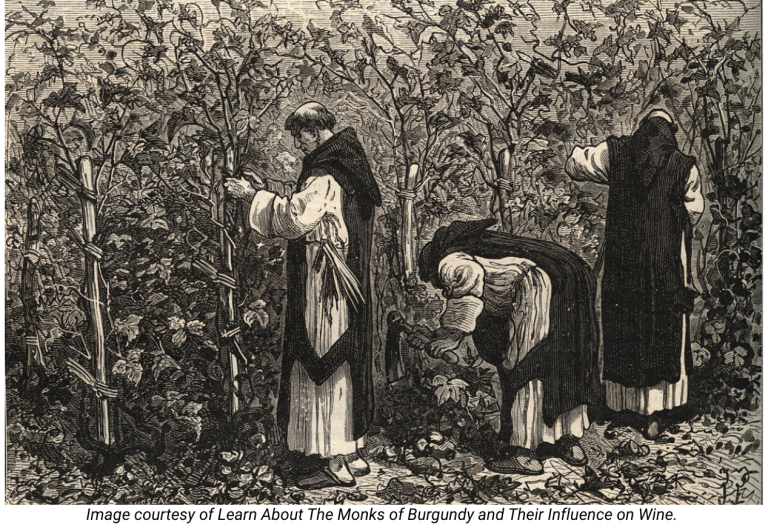
When the Romans conquered Gaul, they introduced an organized wine culture to Burgundy, becoming the first to plant vineyards with method and intent. Over centuries of trial and error, certain grape varieties proved better suited to the region’s conditions. Later, Cistercian and Benedictine monks meticulously documented vineyard performance, unknowingly laying the groundwork for what would later be understood scientifically. Long before modern viticulture, they recognized that Pinot Noir and Chardonnay consistently excelled, shaping Burgundy’s reputation over the last 600 and 300 years respectively.
The Dukes of Burgundy and the Birth of Quality-Driven Wine Law
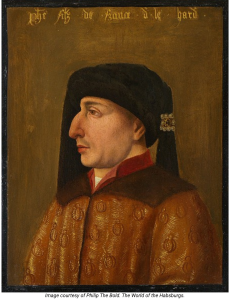
Burgundy’s vineyard hierarchy was not shaped by monks alone. The Dukes of Burgundy, landowners and patrons of winemaking, actively influenced grape selection and vineyard use. In 1395, Philip the Bold famously banished Gamay from the Côte d’Or, declaring Pinot Noir superior in quality, despite its lower yields. This decision, radical at the time, would later prove scientifically sound.
Climat: The Burgundian Definition of Place
Modern oenology would eventually explain what Burgundian growers had long understood instinctively: climat matters.
In Burgundy, climat refers to a precisely defined parcel of vineyard, distinguished by its soil composition, slope, aspect, and microclimate. Recognized as early as the Middle Ages, climat explains why adjacent vineyards can produce profoundly different wines, even when planted to the same grape variety.
Burgundy’s Geology: A Landscape Shaped by Deep Time
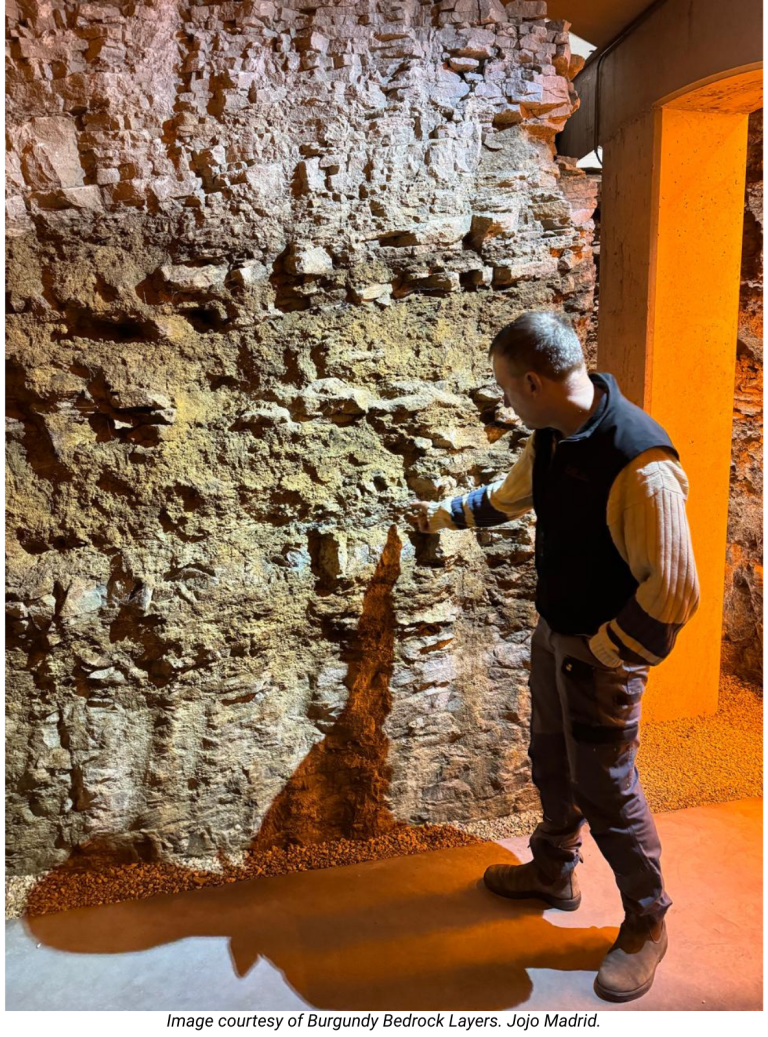
On a macro level, Burgundy’s terrain was shaped by monumental geological forces. Once a Jurassic seabed, the land emerged as oceans receded and tectonic plates collided, the same forces that formed the Alps and Mont Blanc. These movements created layered limestone, marl, and sedimentary soils, later refined by erosion, slope, rainfall, and freeze-thaw cycles. The result is the complex patchwork of soils that defines Burgundy today.
Meso-Level Factors: Aspect, Slope, and Exposure
At the vineyard level, factors such as:
Sun exposure and aspect
Prevailing winds and cloud cover
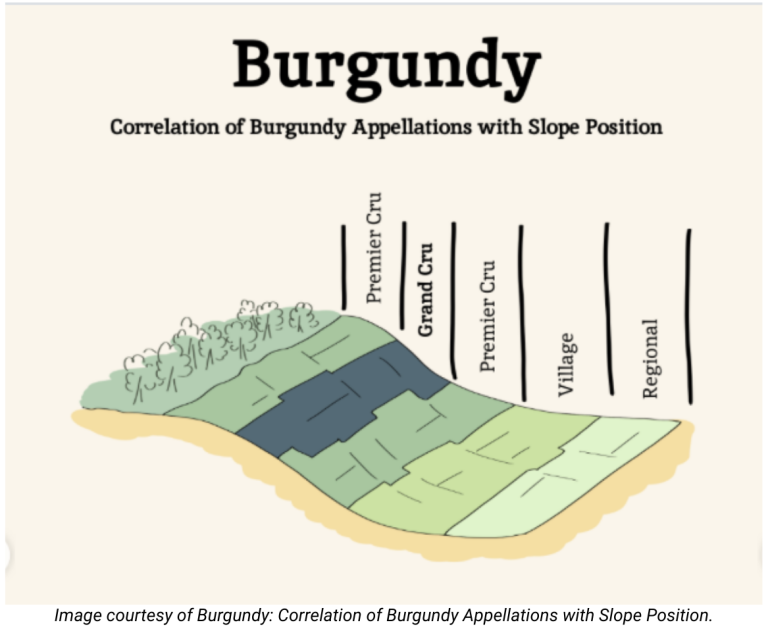
Position on the slope
Frost and drainage risk
continue to influence vine health and grape quality. These natural variables determine both a site’s strengths and its vulnerabilities.
The Burgundy Cru Classification System Explained
These geographic distinctions underpin the Burgundy Cru Classification System, one of the most precise vineyard hierarchies in the world. From medieval records to formal codification under the French AOC system in 1936, Burgundy’s vineyards are classified as:
- Grand Cru
Premier Cru
Village
Regional
This hierarchy reflects the concentration of favorable terroir factors, not branding or marketing.
Why Burgundy Vineyard Names Command Reverence
Names like Vosne-Romanée, Gevrey-Chambertin, Chambolle-Musigny, Les Tâches, Les Amoureuses, and Clos St-Jacques are not abstract labels. They refer to specific places, each bound to a precise geography and terroir. Their reputations are earned through centuries of consistent, site-driven quality.
The Côte d’Or: The Slope of Gold
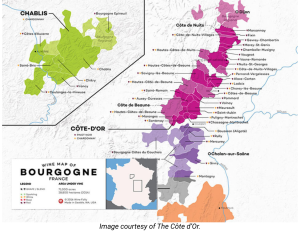
The Côte d’Or, meaning “Slope of Gold,” is the limestone escarpment that forms the heart of Burgundy’s finest vineyards. The name reflects both its autumnal glow and its historic value, long recognized as producing wines of exceptional quality.
Why Pinot Noir and Chardonnay Thrive in Burgundy
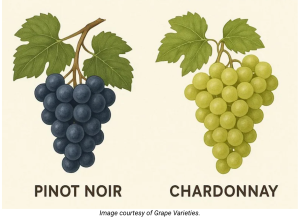
Pinot Noir and Chardonnay succeed in Burgundy because they are early-ripening varieties, ideally suited to the region’s cool, high-latitude climate. More importantly, they possess an unparalleled ability to transmit terroir.
Other grape varieties may thrive here, but many tend to assert varietal character over site expression. In Burgundy, where vineyard land is precious, this would be a misuse of place.
In the Glass: History, Geology, and Place
The next time you hold a glass of Burgundy, consider the forces behind it: drifting continents, Roman legions, monastic diligence, royal decree, and generations of vignerons working in dialogue with the land. Few wines convey history and place with such clarity, depth, and elegance. That is what they mean when they say: Burgundy wine is about place.