LE PUY DE L'OURS
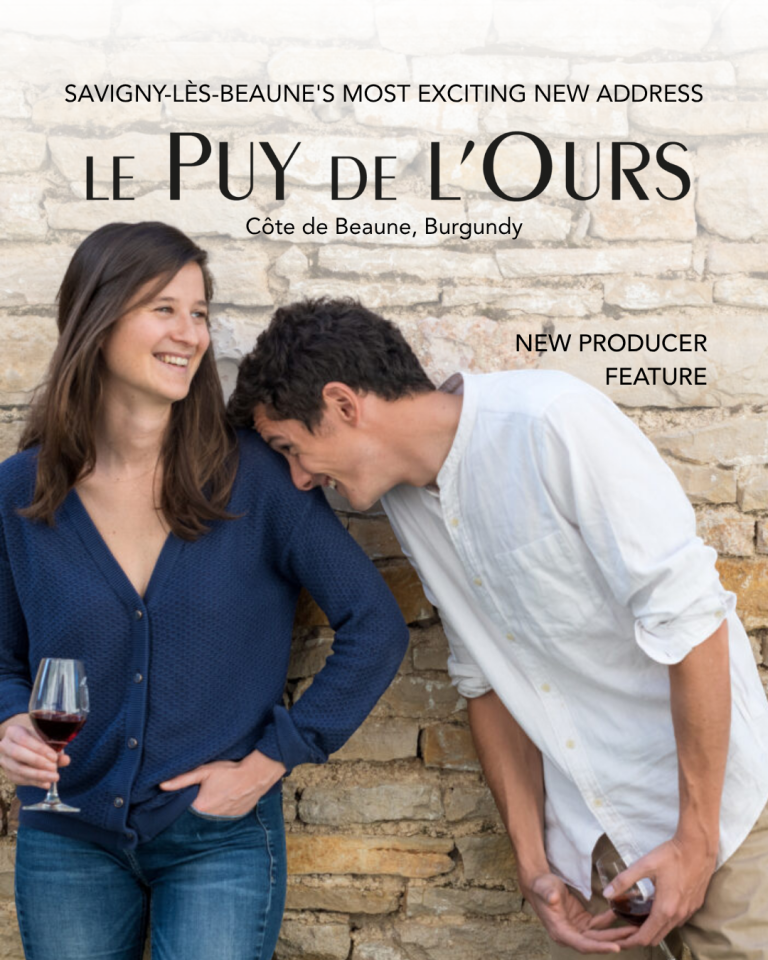
Old family vines, reclaimed by a young couple who left established Paris careers to make wine on their own terms. Jean and Juliette have turned family vine holdings in Savigny-lès-Beaune into one of Burgundy’s most talked-about young estates. Now working across 6 distinct parcels, they have brought a level of site-specificity and transparency that we are thrilled to see to come from this appellation.
The decision Juliette Puyperoux and Jean Orsoni made in 2019 is nothing short of inspiring. Both were tracking serious careers in Paris: Juliette in the wine and spirits world at Rothschild France Distribution, Jean in public investment banking after graduate studies at Paris Dauphine and the ENA. Indeed, they had the kind of lives people spend years constructing. And then, when an opportunity arose in Burgundy, they chose to walk away from all of it.
The opportunity was the 3.5-hectare vineyard that had been in Juliette’s family for two centuries. Her grandparents had farmed it until 2004, when they sold the business but wisely held onto the vines and the winemaking facilities, renting them out in the intervening years. Eventually, in 2019, Juliette and Jean reclaimed what was rightfully theirs, relocated to Savigny-lès-Beaune, and set about learning how to grow grapes and make wine in earnest: specifically, through training stints in Burgundy and South Africa, a professional agricultural certificate, and the kind of immersive, soil-level education that no classroom alone can provide.
The Founders Behind Le Puy de l'Ours
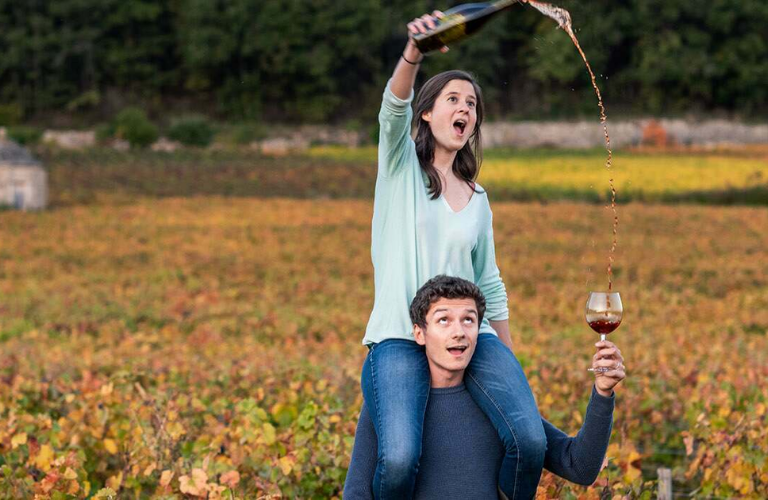
Juliette and Jean have since expanded their holdings to 7.5 hectares, including a previously fallow acorn field in the Hautes-Côtes de Beaune that they replanted with vines in 2022. What began as a reclamation project has grown steadily into one of the most talked-about young estates in the Côte de Beaune.
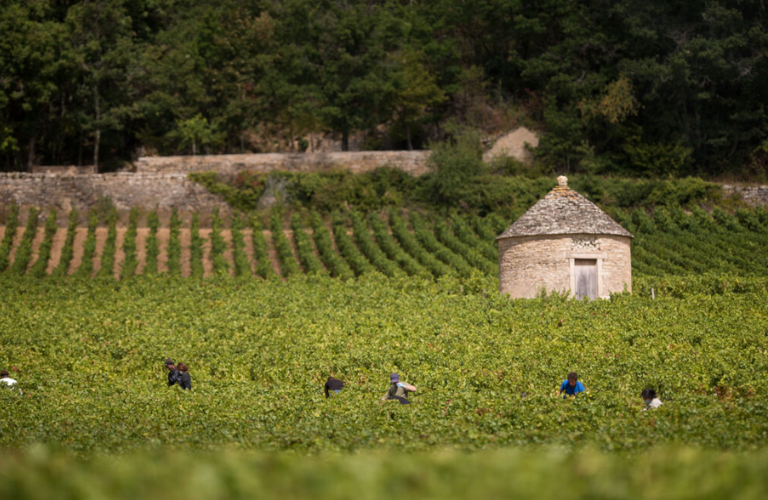
In Savigny-lès-Beaune, they found an appellation that suited their ambitions in more ways than one. As Juliette has noted, Savigny-lès-Beaune has one of the biggest vineyard areas in the Côte de Beaune, and one of the most internally diverse: “We can see this in our own wines, in fact, because we make three Savignys, yet they are very, very different from one another.” That diversity, across six different parcels, is exactly what Le Puy de L’Ours has set out to make legible.
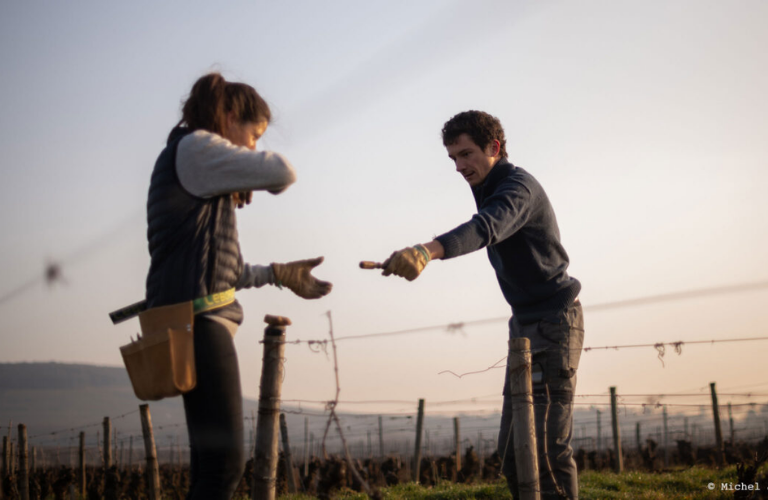
The vineyards are fully certified organic, a commitment Juliette and Jean brought to the domaine from day one. Vine density is kept to the Burgundian standard of 10,000 vines per hectare. Pruning is done as late as possible to protect against spring frosts, with most parcels trained on the traditional single Guyot method. The couple does not spray insecticides, which means the occasional spring night spent hunting budworms manually in the dark, torchlight and all. Yields are kept to a deliberate 40 to 45 hectoliters per hectare.
Winemaking & Cellar Philosophy
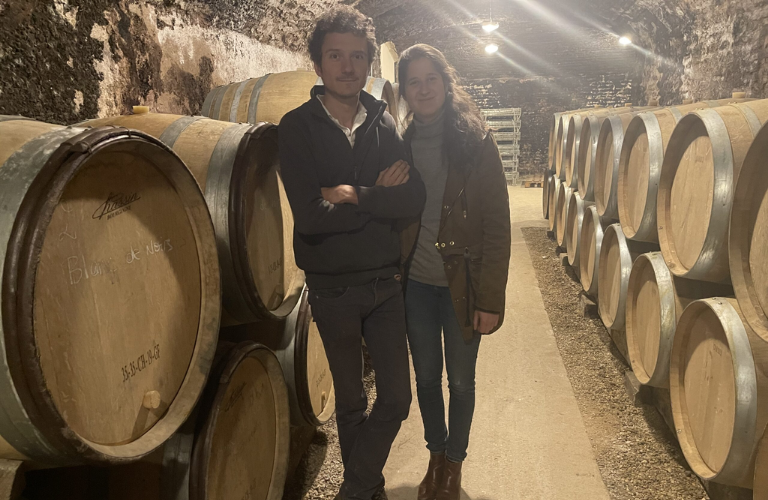
In the cellar, the governing principle is restraint. White wines are whole-cluster pressed with 24 to 48 hours of cold settling before aging in 228-liter and 400-liter barrels for 9 to 15 months. Meanwhile, the two Chardonnays go through full malolactic fermentation in barrel, while the Blanc de Noirs has its malo arrested at around two-thirds, specifically to preserve malic acidity and the wine’s freshness. Similarly, the reds ferment with varying proportions of whole clusters depending on the parcel, from zero percent for the Clos des Godeaux up to 100 percent for the premier cru Les Lavières. Fermentation runs 16 to 24 days with light daily pump-overs, and the wines spend 10 to 12 months in barrel. There is no fining, no new oak except where expressly noted, and sulfur is kept to the barest minimum.
THE WINES
The labels, notably, are all designed by respected French artist Louise Lachaux, who is deeply connected to the contemporary wine culture of Burgundy. With famous works of art as inspiration, each label is chosen to carry the character of its cuvée.
6 wines are made each year: 3 whites and 3 reds. One of those whites is made from Pinot Noir, a Blanc de Noirs, and it tells you immediately that Juliette and Jean are not afraid to challenge the expectations of their appellation. As one observer put it, these are wines that demonstrate an admirable transparency of fruit, out-of-the-gate capable of expressing, with authenticity and sensitivity, the soul of each terroir they come from.
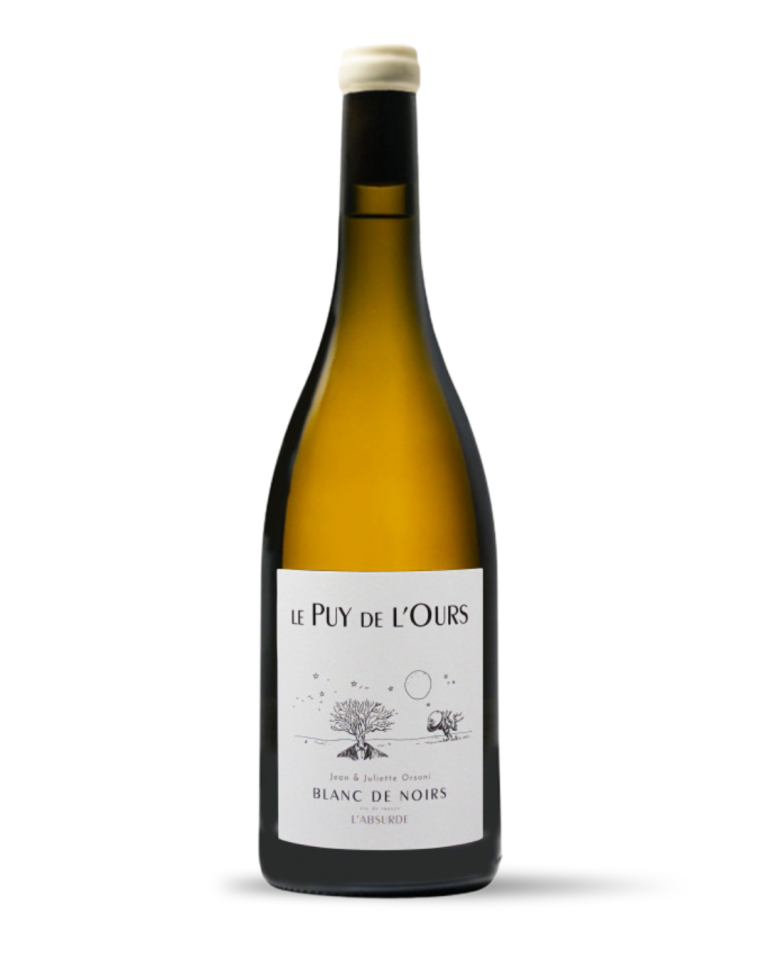
L’Absurde Blanc de Noirs 2023
A white wine made entirely from Pinot Noir: not the product of whimsy, but of a serious reading of the land. The 0.24-hectare parcel of Clos des Godeaux from which it comes sits on limestone and white marl, and it was the soil scientist Claude Bourguignon himself who advised that this particular terroir would express itself beautifully as a white. Planted in 1968, the vines are directly pressed without skin contact, then aged in old oak barrels for around 10 months, with around 50% malolactic fermentation to preserve the wine’s natural energy and acidity.
Unmistakably Pinot on the nose: fleshy white peach and apricot, with a note of orange peel and peppery spice, and a delicate aromatic bridge to fennel flower. The palate is medium-bodied and vibrant, with a citric, zesty energy that keeps it nimble despite the fruit’s richness. Fine, almost grippy texture on the mid-palate, with a saline, phenolic finish of real length. This is a white that thinks like a red, which is exactly what makes it so absorbing.

Côte de Beaune Les Monsnières 2023
Les Monsnières sits at 350 meters on the west-facing high slopes of the Montagne de Beaune: among the highest vineyard elevations in the appellation. The 1.49-hectare parcel is split between vines planted in 1992 and those planted in 2015. Fermentation begins in stainless steel tank and finishes in 400-liter barrels once alcoholic fermentation is one-third complete. Full malolactic conversion in barrel follows, along with 10 months of aging and occasional bâtonnage. 20% new oak.
On the nose, bright and expressive: honeysuckle, orange blossom, yellow peach, and tangerine zest, with a creamy lees note developing beneath. The palate is full-bodied and generous, with a richly textured mid-palate of fleshy stone fruit, anchored by a chalky, stony backbone that keeps the wine honest and long. The finish is dry, firm, and satisfying, with good persistence. A serious Chardonnay from an elevation that imposes its own discipline on the vine.

Savigny-lès-Beaune Les Goudelettes 2023
Les Goudelettes is the highest and most mineral-intensive of the three white parcels: 0.33 hectares on east-facing clay-limestone soils in the hills north of the village, planted in 1990. The limestone concentration here is notably dense, which gives the wine its characteristic citrus freshness and stony grip. Aged 12 months in 300-liter barrels with minimal stirring, then two additional months in tank before release. No new oak, no filtration, no fining.
Orange blossom opens the nose, followed by white peach and a cool mineral note that sharpens the fruit rather than softening it. The palate is full-bodied and exuberant, with excellent tension between the richness of the fruit and the stony, saline energy of the terroir. More tightly wound than the Les Monsnières, with bracing acidity and a longer, more persistent finish. A wine with its feet firmly in the limestone.
RED WINES

Savigny-lès-Beaune Clos des Godeaux 2023
The 1.61-hectare Clos des Godeaux is the most perfectly situated of Le Puy de L’Ours’s red parcels: south-facing, at around 300 meters elevation, on limestone and white marl, planted in 1968 by Juliette’s grandparents. It sits between two premier cru sites, Aux Serpentières and Talmettes, making it one of the most promising village-level addresses in Savigny. It is vinified 100% destemmed, with one light pump-over per day and a single punch-down at the end of fermentation, then aged in old oak barrels for 10 months. No new oak.
Floral and transparent on the nose: raspberry, dried rose petal, and bitter cherry, with a faint spice note emerging with air. The palate is medium-bodied, deft and crunchy, with red cherry and berry fruit framed by supple, well-integrated tannins and excellent purity. Fresh, focused, and light on its feet. It is the most immediately approachable of the three reds, and none the lesser for it.

Savigny-lès-Beaune Les Follettes 2023
Les Follettes is assembled from four separate plots across Savigny: Petits Picotins, Grand Picotins, Aux Fourches, and Saucours, covering 0.78 hectares in total, with vines planted between 1960 and 1979. It is the most structurally complex of the village-level reds, vinified with 50% whole clusters, which introduces an aromatic spice and a savory dimension that the fully destemmed Clos des Godeaux does not carry. Aged in 20% new oak for 15 months.
The nose is more layered and darker than the Godeaux: wild strawberry and raspberry beneath a canopy of sappy exotic spice, with a herbal edge that lifts the fruit. The palate is medium-bodied, with a salty freshness on entry that opens into tender, raspberry-driven fruit, underpinned by supple tannins and a dry, focused finish. The whole-cluster component adds backbone and depth without weight, lending the wine a subtle wildness that rewards attention.

Savigny-lès-Beaune 1er Cru Les Lavières 2023
Les Lavières is the crown of the Le Puy de L’Ours range, and only the second vintage the domaine has released from this site. The 0.8-hectare parcel was planted in 1968 by Juliette’s grandparents, on the calcaire très pierreux: very stony limestone soils at the entrance to the village. It sits in proximity to the premier cru Aux Serpentières, and shares that site’s mineral authority. Les Lavières receives 100% whole-cluster fermentation, the most of any wine in the range, and is aged in 10% new oak, bottled unfiltered.
The nose is the most aromatic and layered of the reds: dark cherry and plum blossom, with exotic spice from the whole clusters, a suggestion of forest floor, and a fine stony depth that holds everything together. The palate is fresh and upbeat, with supple, well-formed raspberry fruit framed by fine, delicate tannins and a finish of real persistence and composure. The step up to premier cru is evident, not through weight but through dimension: this has more layers to unfold, and more to say.
For inquiries, send us a Viber message at +63 (977) 842 4819 or email us at retailandcorp@pwxchange.com.ph