
What's the Address of Your Fizz?
How Champagne Regions Create Distinct Wine Styles
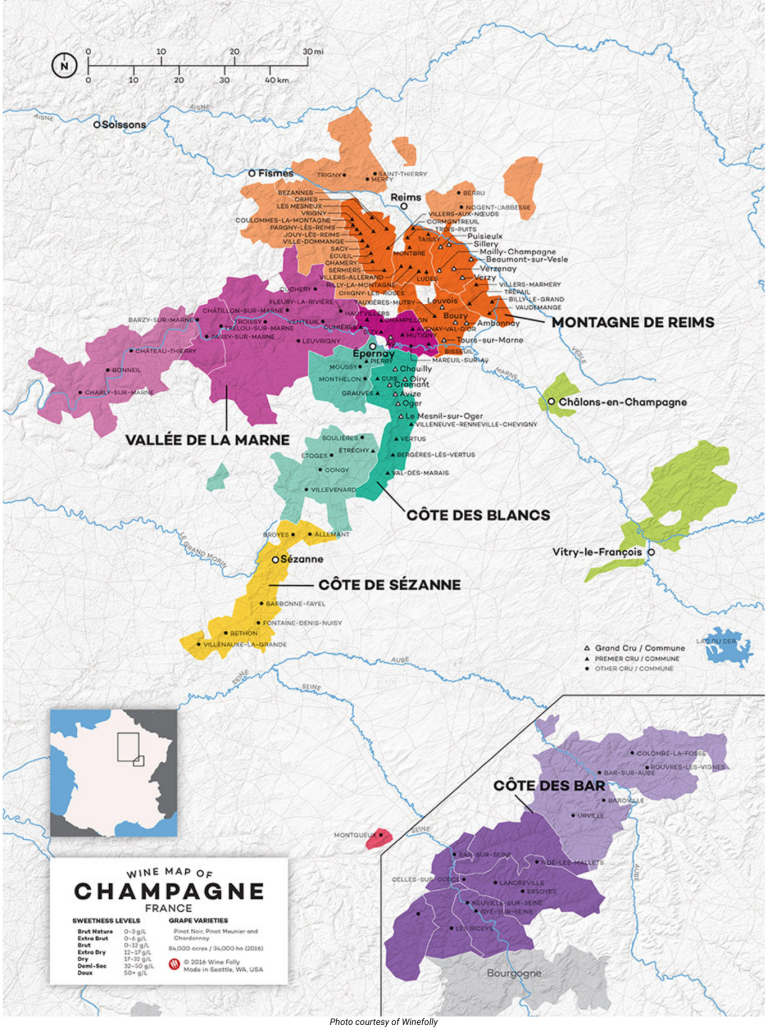
From the chalk slopes of the Côte des Blancs to the limestone ridges of the Montagne de Reims, Champagne is a region of contrasts. Understanding its geography, aside from winemaking style, reveals why no two Champagnes taste quite the same.
Champagne is often discussed as a single wine, summarily set apart from the rest of the world’s sparkling wines. In reality, the region behaves more like Burgundy than many realize, with villages and slopes producing wines that differ in structure, aroma, and aging potential. As Peter Liem (Champagne) writes, “these villages are far from homogeneous,” a reminder that place remains the central driver of style despite the dominance of blending traditions.
“Another way of understanding champagne, however, is by looking at the land itself… champagne is highly expressive of its vineyard origins, and the concept of terroir—is as fundamental to champagne as it is to any other wine.”
— Peter Liem, ”Champagne”
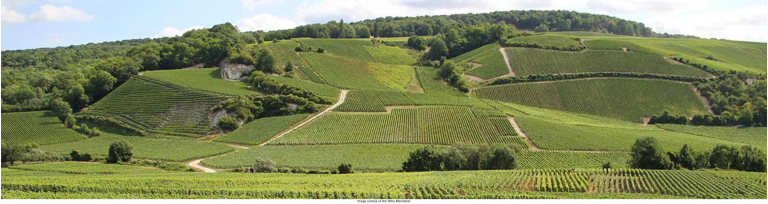
Montagne de Reims, Structure from Pinot Noir
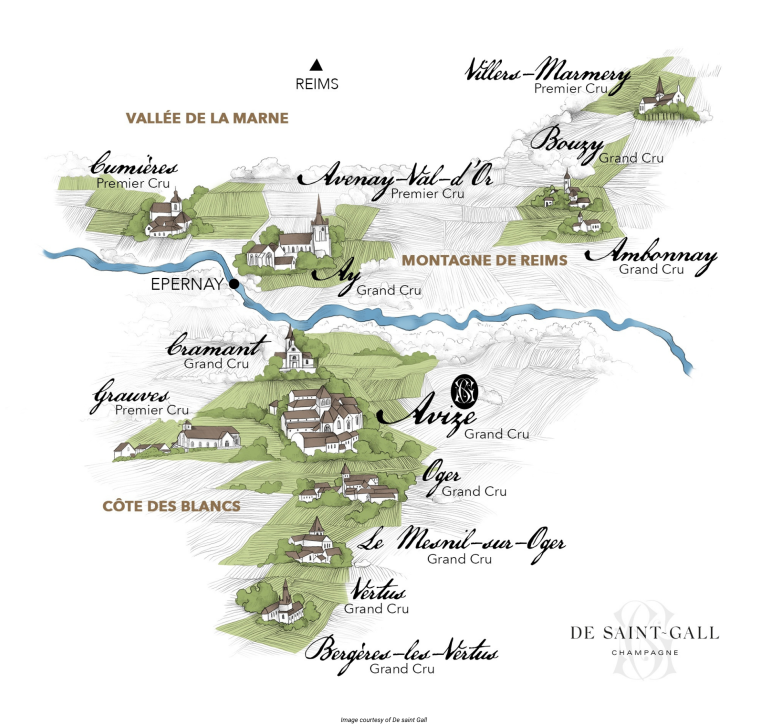
A forested plateau surrounded by Grand Cru villages, Montagne de Reims is widely regarded as the heartland of Pinot Noir Champagne. Chalk and limestone soils contribute firmness, depth, and aging capacity. Producers such as Egly-Ouriet in Ambonnay and Jean Vesselle in Bouzy illustrate the concentration that Pinot Noir can achieve in these villages, while Frédéric Savart, working from Premier Cru vineyards in Écueil, often captures a more aromatic interpretation of the same terrain. Historically, wines from this area supplied what Tom Bruce-Gardyne (Champagne: Wine of Kings and the King of Wines) describes as the “backbone and body” of Champagne blends.
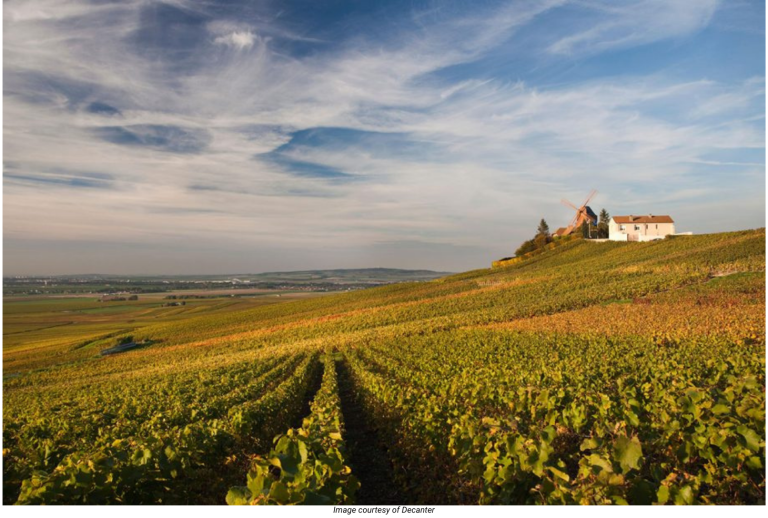
Vallée de la Marne: Meunier and Blending Charm
Between the Montagne de Reims and the Côte des Blancs lies the Vallée de la Marne, where clay-rich soils and river influences favor Meunier. Wines from this area often show round fruit and approachability, playing an essential role in many blends by contributing charm and early balance. Grower estates such as Tarlant, based in Oeuilly, demonstrate how Meunier-rich terroir can produce wines with both generosity and structure, while houses including Philipponnat draw on vineyards in Mareuil-sur-Aÿ to add depth and balance within broader blends. The region also highlights that Champagne’s identity extends beyond its two most famous grapes.
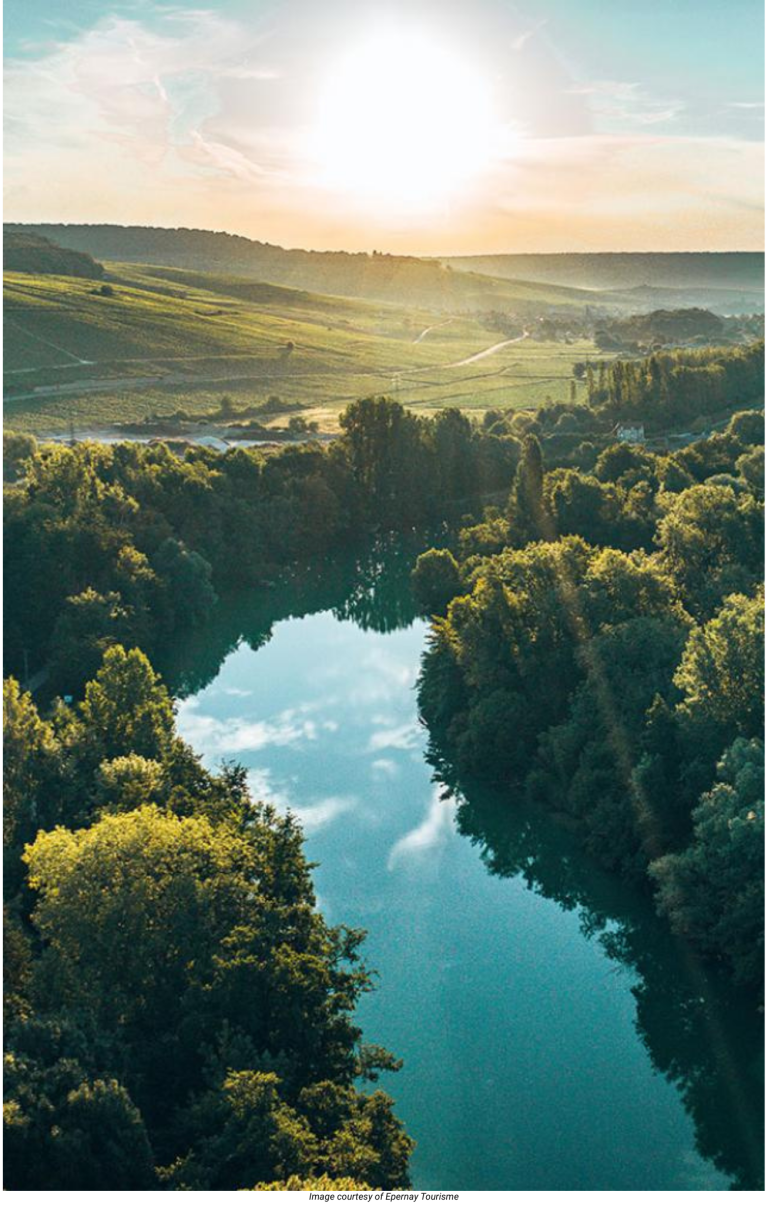
Côte des Blancs, Chardonnay and Chalk Precision
Travel south to the Côte des Blancs and the profile shifts. Chardonnay dominates, rooted in deep chalk that retains water and reflects light back toward the vines, encouraging slow ripening and pronounced acidity. Wines from villages such as Avize, Cramant, and Le Mesnil-sur-Oger are known for citrus definition and mineral persistence, forming the foundation of many Blanc de Blancs wines. Salon, produced only in exceptional years from Le Mesnil-sur-Oger, is exemplified articulation of this landscape. Grower estates including Larmandier-Bernier and La Rogerie explore similar villages through parcel selections, emphasizing site identity. Jacques Selosse, also based in Avize, demonstrates how cellar decisions can amplify terroir rather than obscure it. His wines combine vineyard character with oxidative aging and extended lees contact, creating layered textures that challenge expectations of Chardonnay Champagne. David White (But First, Champagne) notes that wines from this area frequently display laser-like acidity and mineral drive, traits that persist across stylistic differences.
Côte de Sézanne: A Transitional Expression of Chardonnay
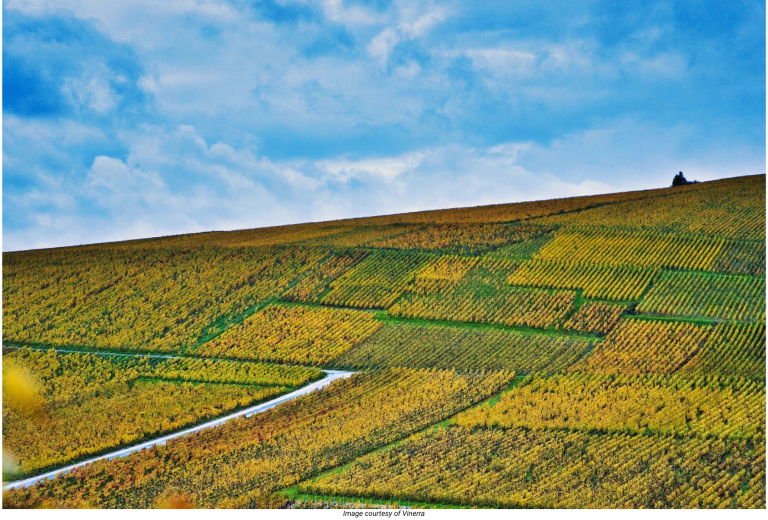
The Côte de Sézanne extends the chalk formations of the Côte des Blancs but introduces slightly warmer conditions. Chardonnay remains dominant, yet the resulting wines tend to show softer acidity and more open fruit expression. Though less widely discussed, the area contributes meaningful nuance to the region’s diversity and plays an important role in the blending palette of many producers.
Côtes des Bar, Warmer Climate and Vibrant Expression
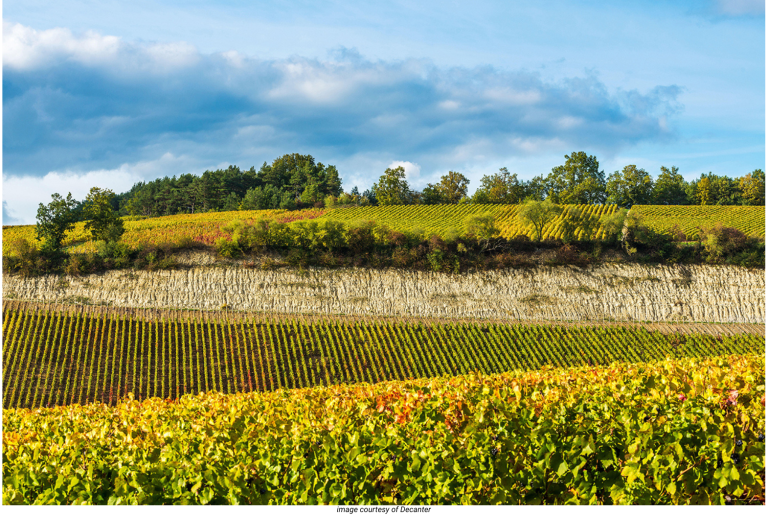
At the southern edge of Champagne, the Côte des Bar presents a geological identity closer to Chablis than to Reims. Kimmeridgian limestone soils and sunnier exposures produce Pinot Noir with broader fruit and supple texture. For decades the area was generally undervalued, yet growers such as Marie Courtin have demonstrated its potential through single-parcel wines that emphasize purity and site transparency. Robert Walters (Bursting Bubbles) describes the region as having emerged from the shadows, as its growers gained recognition for quality and individuality.
Blending Across Champaghe: Complexity Through Diversity
Large houses continue to blend across these areas to achieve consistency, balancing freshness, structure, and generosity. Krug offers one of the clearest examples of this philosophy. Its Grande Cuvée is assembled from numerous villages, grape varieties, and reserve wines spanning multiple years, demonstrating how complexity can emerge not from a single site but from the interplay of many. Peter Liem notes that blending in Champagne is “not simply for consistency, but for complexity,” a principle that sits at the heart of this approach.
Grower producers often train their sights and focus on a single village or vineyard. Both approaches reveal the same truth. Champagne is not one style, but many, and understanding regional origin explains why one wine feels taut and mineral while another appears ample and layered. The diversity is not incidental. It is the region’s defining strength.
For inquiries, send us a Viber message at +63 (977) 842 4819 or email us at retailandcorp@pwxchange.com.ph